Unveiling the Colonial Impact While Forming An Independent Education System In Pakistan
DOI:
https://doi.org/10.64984/ijcd.1.1.2024.01Keywords:
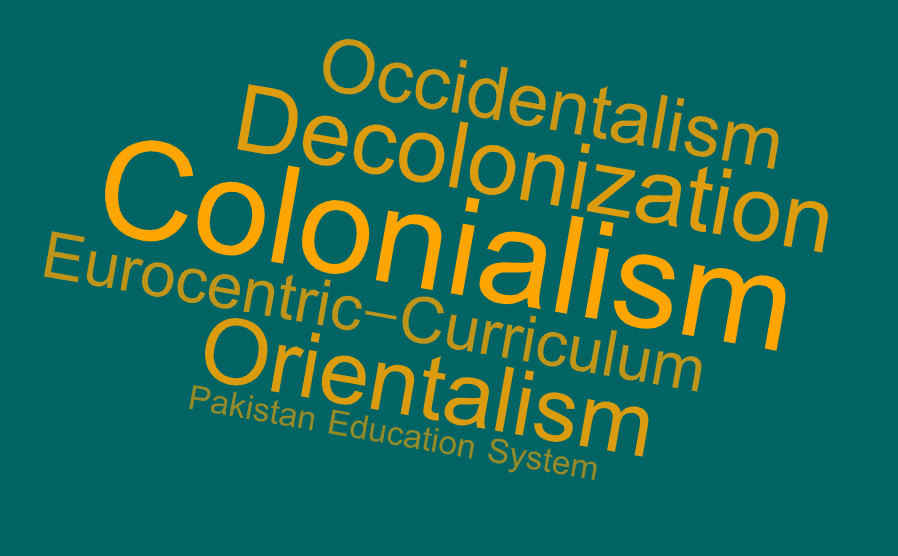
Colonialism, decolonization, Eurocentric-curriculum, orientalism, Occidentalism, Pakistan Education SystemAbstract
The current study will dive into the impact of British ideology regarding education during its rule over the subcontinent, its effect on the current Pakistani curriculum; and how it has caused challenges in forming an independent Educational system particularly in the region of Pakistan (post-independence). The essay will be divided into three main sections. The first section deals with a brief over-view of the post-colonial period and the prevailing education system in Pakistan. The second section will highlights the problem that why the Pakistani Education System is still rooted in British Curriculum. The last section will look at the possible solutions to rectify the damage followed by concluding remarks. In the first section, we will see the educational curriculum of Pakistan through critical lens of post-colonial theory. Whereby, the second sections will take into account an Orientalist and decolonial approach by upholding the stance of Edward Said in particular. The last section will be an endeavor to develop my view point for forming an independent educational curriculum in Pakistan. In addition, this section will also explore future prospects and suggestions in formulating a separate educational system.
Downloads
References
Abbas, A., D. I. Basit, M. Akhtar, U. Mehmood, D. Quratulain, and D. F. Nazim. “Single National Curriculum at School Level in Pakistan: Expected Challenges, Merits and Demerits.” PalArch’s Journal of Archaeology of Egypt / Egyptology 19 (3), (2022): 48–65. Available at: https://archives.palarch.nl/index.php/jae/article/view/11167.
Abbas, F., A. Pervaiz, and F. Arshad. The Competing Status of Urdu and English after Declaration of Urdu as Official Language in Pakistan. Journal of Research (Urdu), 34 (1), (2018): 142-158.
Ahsan, H. Analyzing the Pros and Cons of Single National Curriculum. PIED, 2021. Available at: https://pide.org.pk/ [Accessed 24 Feb. 2024].
Amir, A. “Tracing Colonial Discourses in Pakistani Educational and Language Policy.” In Language Policy Forum BAAL 2023 Decolonizing Language Policy. London: SOAS, University of London, 2023, Available at: https://www.researchgate.net/ [Accessed 24 Feb. 2024].
Amjad, R., and G. MacLeod. “Academic effectiveness of private, public and private–public partnership schools in Pakistan. International Journal of Educational Development 37, (2014): 22–31, https://doi.org/10.1016/j.ijedudev.2014.02.005
Andrabi, T., J. Das, and A. Khwaja. “A Dime a Day: The Possibilities and Limits of Private Schooling in Pakistan.” Comparative Education Review 52 (3), (2008): 329–355, https://doi.org/10.1086/588796.
Andreotti, V. Actionable Postcolonial Theory in Education. Basingstoke: Palgrave Macmillan, 2011.
Apple, M.W. “The Politics of Official Knowledge: Does a National Curriculum Make Sense?” Discourse: Studies in the Cultural Politics of Education, 14 (1), (1993): 1–16, https://doi.org/10.1080/0159630930140101.
Al-Azm, S. J. “Orientalism and Conspiracy,” in A. Graf, S. Fathi, and L. Paul, (ed.) Orientalism and Conspiracy: Politics and Conspiracy Theory in the Islamic World. 2-29, Bloomsbury Publishing, 2010.
Billquist, D. L. and J. M. Colbert. “Pakistan, Madrassas, and Militancy.” Doctoral Dissertation: Naval Postgraduate School, 2006. Available at https://apps.dtic.mil/sti/citations/ADA460444. [Accessed 30 April 2024].
Burney S. “Chapter Two: Edward Said and Postcolonial Theory: Disjunctured Identities and the Subaltern Voice,” In Pedagogy of the Other: Edward Said, Postcolonial Theory, and Strategies for Critique. Counterpoints: Studies in the Postmodern Theory of Education, (Vol. 417), 41-60, Peter Lang, 2012.
Cartwright, R. L. “Some Remarks on Essentialism.” The Journal of Philosophy 65 (20), (1968): 615, https://doi.org/10.2307/2024315.
Chibber, V. Postcolonial Theory and the Specter of Capital. London: Verso, 2013.
Clarke, J. J. Oriental Enlightenment: The Encounter between Asian and Western Thought. New York: Routledge, 1997.
Cutts, E. H. “The Background of Macaulay’s Minute.” The American Historical Review 58 (4), (1953): 824–853, https://doi.org/10.1086/ahr/58.4.824.
Dallmayr, F. R. Beyond Orientalism: Essays on Cross-Cultural Encounter. Albany: State University of New York Press, 1996.
Farooq, M. S., N. Feroze, and Y. T. Kai. “Public vs Private Quality Education at Primary Level in Pakistan.” International Online Journal of Primary Education 6 (2), (2017): 1–23. Available at: https://dergipark.org.tr/en/pub/iojpe/issue/69825/1113751.
Francis, B. and M. Mills. “Schools as Damaging Organisations: Instigating a Dialogue Concerning Alternative Models of Schooling.” Pedagogy, Culture and Society, 20 (2), (2012): 251–271, https://doi.org/10.1080/14681366.2012.688765.
Halliday, F. “Orientalism’ and its Critics.” British Journal of Middle Eastern Studies, 20 (2), (1993): 145–163, https://doi.org/10.1080/13530199308705577.
Hashim, R. “Islamization of the Curriculum.” American Journal of Islam and Society, 16 (2), (1999): 27–43, https://doi.org/10.35632/ajis.v16i2.2127.
Hashmi, K., An Analytical Study on Issues, Challenges and Reforms in the Pakistan Studies Curriculum of Secondary Level.” International Journal of Social Sciences 1 (3), (2011): 210-222.
Heehs, P. “Shades of Orientalism: Paradoxes and Problems in Indian Historiography.” History and Theory, 42 (2), (2003): 169–195, https://doi.org/10.1111/1468-2303.00238.
Heyes, C. “Identity Politics.” Fall 2018. Stanford Encyclopedia of Philosophy, 2018. Available at: https://plato.stanford.edu/.
Hopwood, D. “Albert Hourani: Islam, Christianity and Orientalism.” British Journal of Middle Eastern Studies, 30 (2), (2003): 127–136, https://doi.org/10.1080/1353019032000126491.
IIPS “Single National Curriculum (SNC) in Pakistan.” Imarat Istitute Policy Studies, 2021a. Available at: https://iips.com.pk/[Accessed 24 Feb. 2024].
IIPS. “The Rise of Private Education in Pakistan.” Imarat Institute of Policy Studies – IIPS, 2021b. Available at: https://iips.com.pk/the-rise-of-private-education-in-pakistan/ [Accessed 24 Apr. 2024].
Jamil, B. R., “Curriculum reforms in Pakistan–A Glass Half Full or Half Empty.” In Seminar on School Curriculum Policies and Practices in South Asian Countries, NCERT. Delhi: India, 2009.
Khan, S. and A. Raza. “(De)Coloniality in Research: A Case Study of English Literary Humanities in Pakistan.” Journal of Research in Humanities 56 (1), (2020): 17–35.
Knowles, M. D. “Thomas Babington Macaulay, Baron Macaulay: English Politician and Author.” Encyclopedia Britannica, (2023). Available at: https://www.britannica.com/ [Accessed 26 Feb. 2024].
Macfie, A.L. Orientalism. London: Routledge, 2002.
Malik, M. U. and N. Abbass. “Private Schooling Preference over Public Schooling (Research Methodology and Report Writing).” 2017. Ssrn.com. Available at: https://papers.ssrn.com/sol3/papers.cfm?abstract_id=3575605 [Accessed 30 Apr. 2024].
Morris, M. “Postcolonial Curriculum Concepts.” Counterpoints 499 (2016): 209–246. Available at: https://www.jstor.org/ [Accessed 23 Feb. 2024].
Nagre, K. “(Mis)educating England: Eurocentric Narratives in Secondary School History Textbooks.” Race Ethnicity and Education, (2023): 1–20, https://doi.org/10.1080/13613324.2023.2192945.
Qayyum, A., A. Saleem, and K. Shezad. “Impact of Colonial Rule on Today’s Educational System of Pakistan.” International Journal of Business, Economics and Management Works 2 (9), (2015): 51–58, Available at: https://www.researchgate.net/publication/308950145 [Accessed 11 Feb. 2024].
Rahman, K. “Madrassas in Pakistan: Role and Emerging Trends.” Islam and Politics 120 (2009): 57-70.
Rahman, T. “The Urdu —English Controversy in Pakistan.” Modern Asian Studies 31 (1), (1997): 177–207, https://doi.org/10.1017/s0026749x00016978.
Raza, A. and H. S. Murad, “Gender Gap in Pakistan: a Socio‐Demographic Analysis.” International Journal of Social Economics 37 (7), (2010): 541–557, https://doi.org/10.1108/03068291011055478.
Rind, G.M. “Postcolonial Critiques on Globalization and Privatization of Education in Pakistan.” Current Issues in Comparative Education 25(1), (2023): 112–120, https://doi.org/10.52214/cice.v25i1.10017.
Said, E. W. “Arabs, Islam and Dogmas of the West.” In: Macfie, A. L. (ed.) Orientalism: A Reader, 104-106. New York University Press, 2000.
—. Orientalism. London: Routledge & Kegan Paul Ltd, 1978.
—. Culture and Imperialism. London: Vintage, 1994.
Shah, M. H. “Edward Said and Bernard Lewis in the Question of Orientalism: A Clash of Paradigms?” In A. Graf, S. Fathi, and L. Paul (editors), Orientalism and Conspiracy: Politics and Conspiracy Theory in the Islamic World. 45-67, Bloomsbury Publishing, 2010.
Siddiqui, N. and S. Gorard. “Comparing Government and Private Schools in Pakistan: The Way Forward for Universal Education.” International Journal of Educational Research 82, (2017): 159–169, https://doi.org/10.1016/j.ijer.2017.01.007.
Silova, I., J. Rappleye, and Y. You. “Beyond the Western Horizon in Educational Research: Toward a Deeper Dialogue about Our Interdependent Futures.” ECNU Review of Education, 3(1), (2020): 3–19, https://doi.org/10.1177/2096531120905195.
Takayama, K., A. Sriprakash, and R. Connell. “Toward a Postcolonial Comparative and International Education.” Comparative Education Review, 61(S1), (2017): S1–S24, https://doi.org/10.1086/690455.
Taylor, E., D. Gillborn, and G. Landson-Billings. “Education Policy as an Act of White Supremacy: Whiteness, Critical Race Theory, and Education Reform.” In Foundations of Critical Race Theory in Education. Routledge, 2016.
Turner, B. S. Orientalism, Postmodernism and Globalism. New York: Routledge, 2002.
Youdell, D. “Diversity, Inequality, and a Post-structural Politics for Education. Discourse: Studies in the Cultural Politics of Education 27 (1), (2006): 33–42, https://doi.org/10.1080/01596300500510252.
Zaidi, S. B. and S. Zaki. “English Language in Pakistan: Expansion and Resulting Implications.” Journal of Education and Social Sciences 5 (1), (2017): 52-67.
Published
Issue
Section
License
Copyright (c) 2024 Bukhatawar Khan

This work is licensed under a Creative Commons Attribution 4.0 International License.
This work is licensed under a Creative Commons Attribution 4.0 International License. Authors retain copyright and grant the journal right of first publication with the work simultaneously licensed under a Creative Commons Attribution (CC-BY) 4.0 License that allows others to share the work with an acknowledgement of the work’s authorship and initial publication in this journal.
How to Cite