
A Collaboration of Mystic Trends: The Concept of Soul and Love in Platonism and Sufism
DOI:
https://doi.org/10.64984/ijcd.1.2.2024.04Keywords:
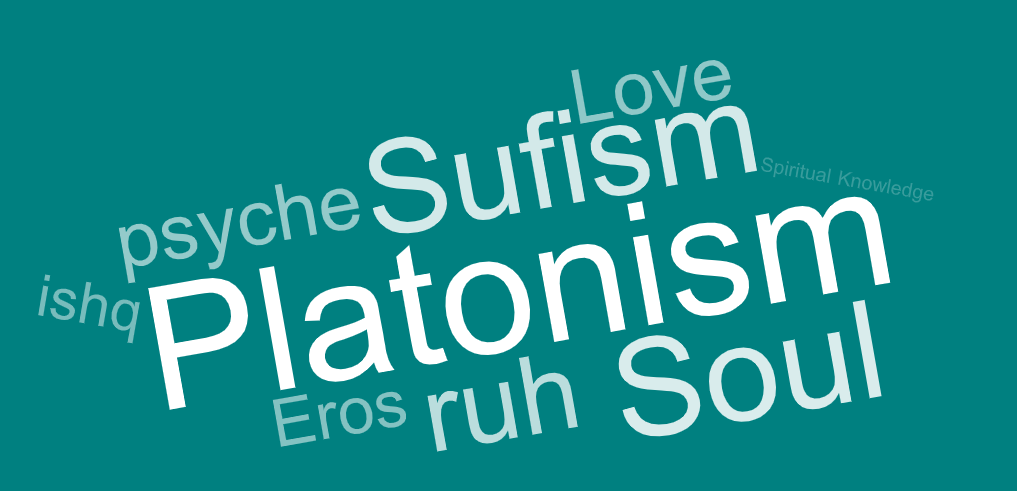
Platonism, Sufism, Soul (psyche/ ruh), Love (Eros/ishq), Spiritual KnowledgeAbstract
The concepts of soul and love have extended roots that date back to the history of mankind. This paper is an endeavor to collaborate two parallel concepts that approached the subject of love and soul from different worldviews: philosophical rationalism verses theological mysticism. In Plato, we find a rational study of metaphysics; while in Islamic mysticism (Sufism), we find an intuitive insight to metaphysics. Yet these parallels reached the same conclusion that love beholds a sacred power that can transform and purify self to seek knowledge or union with the Divine. The purpose of this paper is neither to depict errors or truth nor produce critique about these altering views; but to maintain a foundational belief for the existence of soul and love which were often rendered as meaningless, pseudo and irrational in contemporary thought. Although the nature of these concepts is complex, yet there is a high probability of their existence whether we name it as soul, essence, élan vital, etc. Through comparative analysis of both worldviews, we can prove that soul and love exists even from a rational perspective. The study will start with discussing the historical evidence of mystic trends across religions and cultures; and the origin of the concept of soul. In later sections, our study’s prime focus would be on the concept of soul and love in Platonism and Sufism respectively.
Downloads
References
Arberry, A.J. Sufism: An Account of the Mystics of Islam. Routledge: London, 1950.
Appendix on Symbolism. n.d. http://www.al-islam.org/wine-love-mystical-poetry-imam-khomeini/appendix-symbolism-religious-poetry (accessed november 2, 2013).
Bambang Suharto, Abdul Wachid. “The Concept of Love and the Basis of Its Doctrines between Maqamat and Haal.” Lensa: Kajian Kebahasaan, Kesusastraan, Dan Budaya 11 (1), (2021): 42-53, https://doi.org/10.26714/lensa.11.1.2021.42-53.
Bergson, Henri. American Heritage Dictionary. n.d. http://www.answers.com/topic/elan-vital#ixzz2jeZhFkaJ (accessed november 2, 2013).
Bhar, Gopal C. "Understanding Mysticism through Quantum Physics." Prabuddha Bharata or Awakened India. 123, no. 3 (2018): 347-365.
Bussanich, John., and Majid Fakhry. “Philosophy, Dogma and the Impact of Greek Thought in Islam.” Philosophy East and West 47 (2), (1997): 282, https://doi.org/10.2307/1399884.
Burckhardt, Titus. An Introduction to Sufism. Calif.: Thorsons, 1995.
Cobb, W F. Mysticism and the Creed. Literary Licensing, LLC, 2014.
Collingwood, Robin George. The Principles of Art. London: Oxford University Press, 1958.
Dalhat, Yusuf. “The Concept of Al-ruh (Soul) in Islam.” International Journal of Education and Research 3 (8) (2015): 431-440, https://www.ijern.com/journal/2015/August-2015/35.pdf.
Feldman, cal. "elan vital." n.d. http://www.elan-vital.net/elanvital/ (accessed november 4, 2013).
Ferguson, A. S. “Plato’s Simile of Light. Part I. The Similes of the Sun and the Line.” The Classical Quarterly 15 (3-4), (1921): 131–52, https://doi.org/10.1017/s0009838800000604.
Godelek, Kamuran. “The Neoplatonist Roots of Sufi Philosophy.” The Paideia Archive: Twentieth World Congress of Philosophy 5 (1997): 57–60, https://doi.org/10.5840/wcp20-paideia19985114.
Glidden, David., and A. W. Price. “Love and Friendship in Plato and Aristotle.” Noûs 27 (1), (1993): 109, https://doi.org/10.2307/2215907.
Graham, Daniel W. “Does Nature Love to Hide? Heraclitus B123 DK.” Classical Philology 98 (2), (2003): 175, https://doi.org/10.2307/1215500.
Graham, Daniel W. “The Legacy of Parmenides.” Ancient Philosophy 18 (2), (1998): 435–39, https://doi.org/10.5840/ancientphil199818237.
“Ḥasidism: Medieval Jewish Religious Movement.” (2023). In Encyclopedia Britannica, https://www.britannica.com/topic/Hasidism-medieval-Jewish-religious-movement
Harper, Douglas. Dictionary of Etymology. 2001. http://www.etymonline.com/index.php?term=mystic (accessed November 23, 2013).
Heraclitus, Heraclitus, Fragments: A Text and Translation with a Commentary. T. M. Robinson, (commentary), translated by S. D. Sullivan, University of Toronto Press, 1987, https://doi.org/10.2307/1088761.
Irwin, Terence. Classical Philosophy. Oxford University Press Inc., 1999.
Khan, Aqsa Abdul Muqeet. "Love, Peace and Toleration: with Special Reference to Jalal-ud-din Rumi." M.Phil. Diss. University of the Punjab, 2015.
Khan, Diwan Taskheer. "A Critical Exposition of Ibn Arabi’s Doctine of Wahdat Ul Wajood." International Journal of Contemporary Research in Humanities and Social Sciences 6, no. 2 (2017): 11-21.
Khan, Shadab. “The Alchemy of Love: Transforming Human Longing into Divine Union in Rumi’s Tale of ‘the King and the Handmaiden.’” International Journal of Multidisciplinary Educational Research, 13 (11), (2024): 105-111, http://ijmer.s3.amazonaws.com/pdf/volume13/volume13-issue11(1)/18.pdf.
Kraut, Richard. "Plato on Love." Oxford Handbooks Online. Oxford University Press, 2008, https://doi.org/10.1093/oxfordhb/9780195182903.003.0012.
Lopez, Donald. “Nirvana: Religion.” In Encyclopaedia Britannica, 2014. https://www.britannica.com/topic/nirvana-religion
Mansfeld, Jaap. “Plato, Pythagoras, Aristotle, the Peripatetics, the Stoics, and Thales and His Followers ‘on Causes.’” In A. Brancacci (Ed.), Antichi e Moderni nella Filosofia d'Eta Imperiale (Elenchos 34) (Bibliopolis, 2002), 17-68
Marcacci, Flavia. “Argumentation and Counterfactual Reasoning in Parmenides and Melissus.” Revista Archai, no. 30 (May), (2020): e03004, https://doi.org/10.14195/1984-249x_30_4.
McGinn, Bernard J., and Linwood Fredericksen. “Christianity: Definition, Origin, History, Beliefs, Symbols, Types, & Facts.” In Encyclopedia Britannica, 1999, https://www.britannica.com/topic/Christianity/Eastern-Christianity#ref301436
Merkur, Dan. “Mysticism - Daoism, Chinese, Philosophy.” Encyclopaedia Britannica, 2025, https://www.britannica.com/topic/mysticism/Daoist-traditions
Moore, Edward. “Neo-Platonism.” In Internet Encyclopedia of Philosophy, 2022. https://iep.utm.edu/neoplato/
Mouroutsou, Georgia. “The Allegory of the Cave: The Necessity of the Philosopher’s Descent.” Plato Journal, no. 11, (2011), https://doi.org/10.14195/2183-4105_11_4.
Mohammadi, A. Sadat Mir. “A Study on the Role of Sama in Literary-Mystical Texts.” Journal of Fundamental and Applied Sciences 9 (1S), (2017): 366, https://doi.org/10.4314/jfas.v9i1s.697.
Murphy, N. R. “The ‘Simile of Light’ in Plato’s Republic.” The Classical Quarterly 26 (2), (1932): 93–102, https://doi.org/10.1017/s0009838800002366.
Nasr, Seyyed Hossein. "The Spread of the Illuminationist School of Suhrawardi." Studies in Comparative Religion 6, no. 3 (1972): 1-14, http://www.studiesincomparativereligion.com/uploads/ArticlePDFs/201.pdf
Petruzzello, Melissa. “Hesychasm: Definition, History, Practice, and Facts.” In Encyclopaedia Britannica, 2023, https://www.britannica.com/topic/Hesychasm
Plato. Plato. Translated by C. J. Emlyn-Jones and William Preddy. Harvard University Press, 2013.
—. Symposium. Translated by Benardete. Athens, 385–380 BC.
—. the Republic. Translated by Benjamin Jowett. an elctronic classic series publication, 2013.
Ray, Michael. “Merkava: Kabbalah, Chariot Vision and Divine Presence.” In Encyclopaedia Britannica, 2023, https://www.britannica.com/topic/Merkava-Jewish-mysticism
Roberts, Eric J. “Plato’s View of the Soul.” Mind 14 (55), (1905): 371–89, https://www.jstor.org/stable/2248426.
Russell, Bertrand. History of Western Philosophy. Touchstone, 2008.
Scott, Douglas J. Archetypes of Wisdom. fourth edition. Wadsworth, 2001.
Sisko, John E. “Anaxagoras Betwixt Parmenides and Plato.” Philosophy Compass 5 (6), (2010): 432–42, https://doi.org/10.1111/j.1747-9991.2010.00300.x
Shah-Kazemi, R. “The Notion and Significance of Ma’rifa in Sufism.” Journal of Islamic Studies 13 (2), (2002): 155–81, https://doi.org/10.1093/jis/13.2.155.
Shields, Christopher. “Plato’s Divided Soul.” In Ockham on Emotions in the Divided Soul, eds., Dominik Perler and Klaus Corcilius. 15-38, De Gruyter, 2014, https://doi.org/10.1515/9783110311884.15.
Suharto, Abdul Wachid Bambang. “The Concept of Love in Sufism.” Jurnal Sastra Indonesia 11 (3), (2022): 219–26, https://doi.org/10.15294/jsi.v11i3.52135
Tate, J. “Plato and Parmenides - Francis Macdonald Cornford: Plato and Parmenides. Parmenides’ Way of Truth and Plato’s Parmenides Translated with an Introduction and a Running Commentary. Pp. Xvii+251. London: Kegan Paul, 1939. Cloth, 12s. 6d. Net.” The Classical Review 55 (2), (1941): 76–78, https://doi.org/10.1017/s0009840x00310162.
Urstad, Kristian. "Loving Socrates: The Individual and the Ladder of Love in Plato’s Symposium." Res Cogitans 1, no. 7 (2010): 33-47.
W.H. Thompson, D.D. The Phaedrus of Plato. London: Whitaker & Co., 1968.
Washburn, Phil. Philosophical Dilemmas. New York: Oxford University Press, 2001.
Williams, Bernard. "The Analogy of City and Soul in Plato’s Republic." In Essays on Plato’s Psychology, edited by Ellen Wagner, 157-168. Lanham: Lexington Books, 2001.
Published
Issue
Section
License
Copyright (c) 2024 Aqsa Abdul Muqeet Khan (Author)

This work is licensed under a Creative Commons Attribution 4.0 International License.
This work is licensed under a Creative Commons Attribution 4.0 International License. Authors retain copyright and grant the journal right of first publication with the work simultaneously licensed under a Creative Commons Attribution (CC-BY) 4.0 License that allows others to share the work with an acknowledgement of the work’s authorship and initial publication in this journal.
How to Cite